
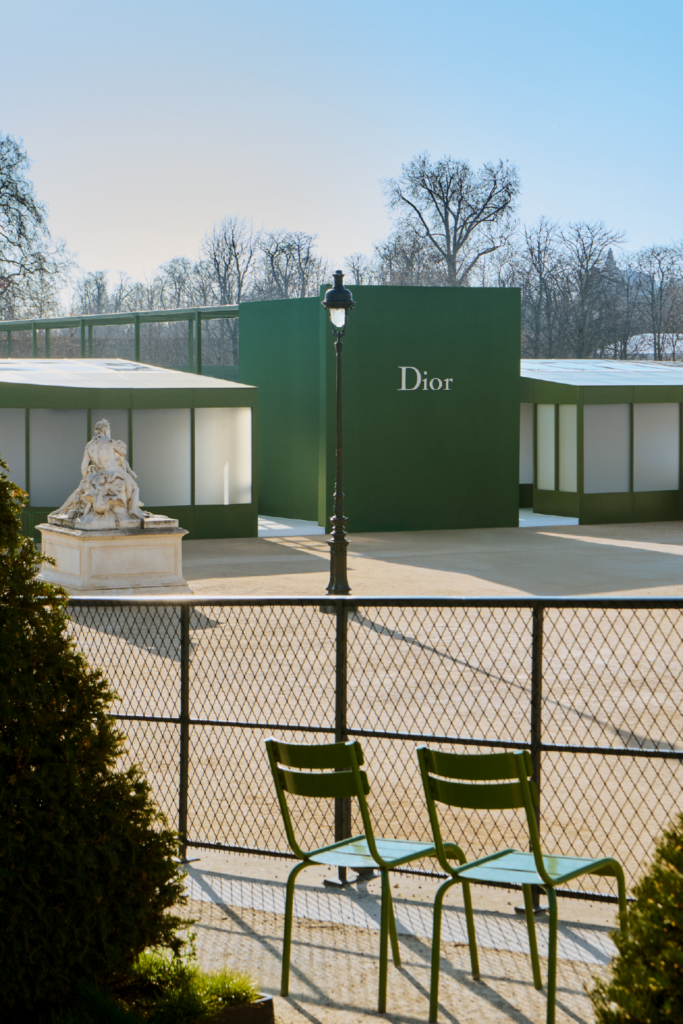
Set in the Jardin des Tuileries, this Paris landmark not only hosted the Fall/Winter 2026 Dior Show but also served as a key reference point for the collection.


Take a Spring Stroll Through the Jardin des Tuileries with Dior
1 / 2


Photos courtesy of Dior.
Become an S Insider
The latest in fashion, beauty, design, and arts & culture.
Fashion has historically been connected to the history of the garden. Initially commissioned by Catherine de’ Medici and later revamped during Louis XIV’s reign, the park opened in 1667 with a strict dress code requiring visitors to dress appropriately and display their social status.
This rule transformed a simple stroll into a performance—making the park resemble a stage. The indicators of class and wealth were presented as a reckoning, unlocking a tailored perception of the subject.

Photo by Adrien Dirand.
Take a Spring Stroll Through the Jardin des Tuileries with Dior
1 / 3
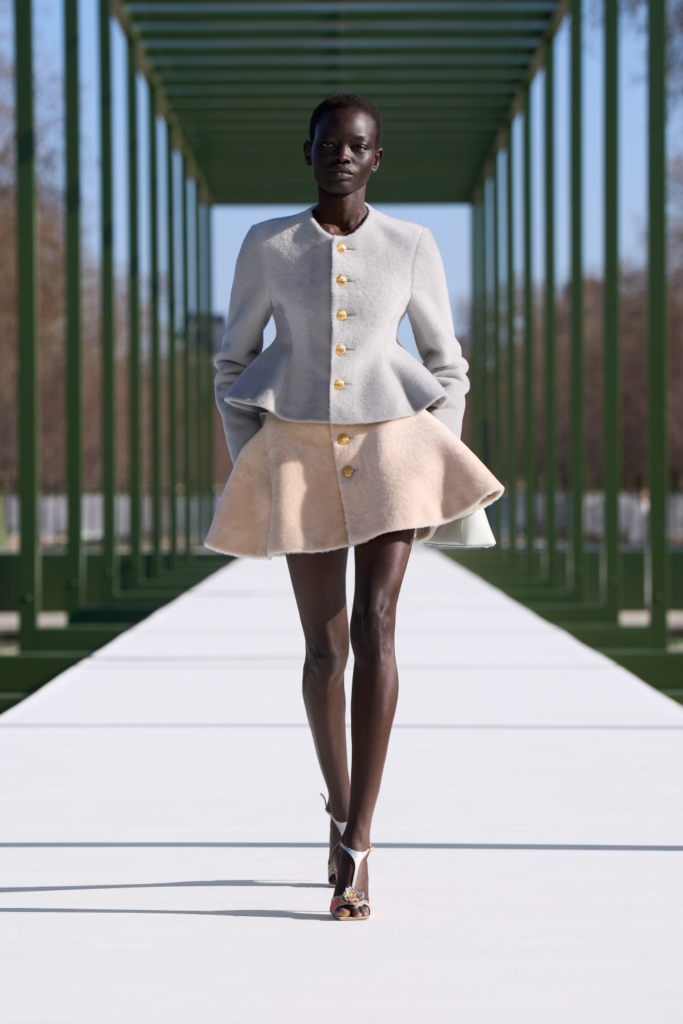
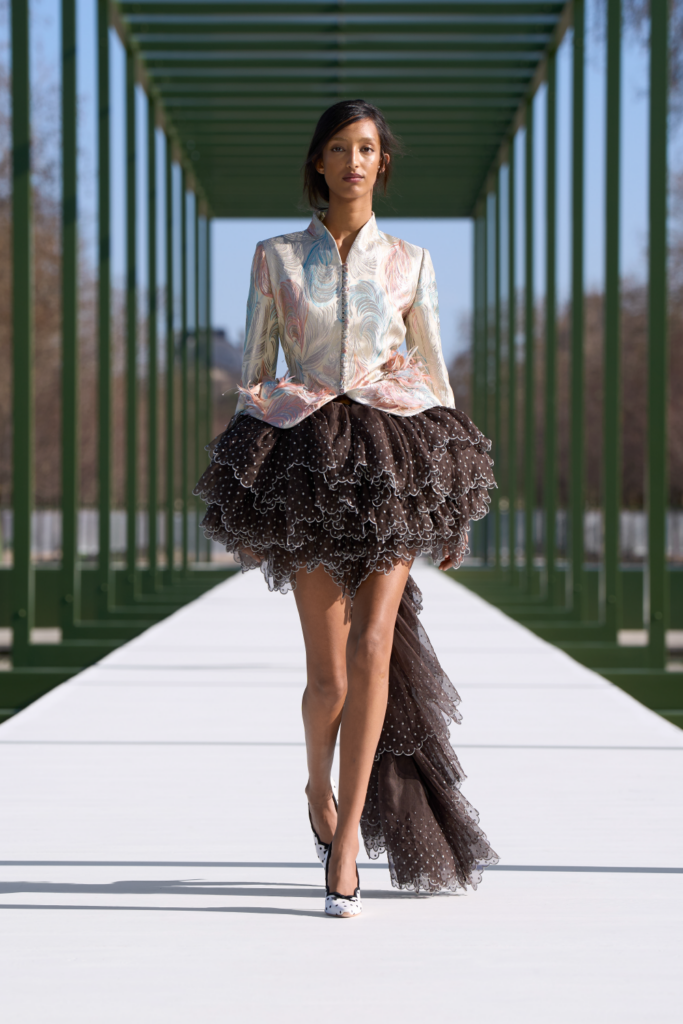
Photos courtesy of Dior.
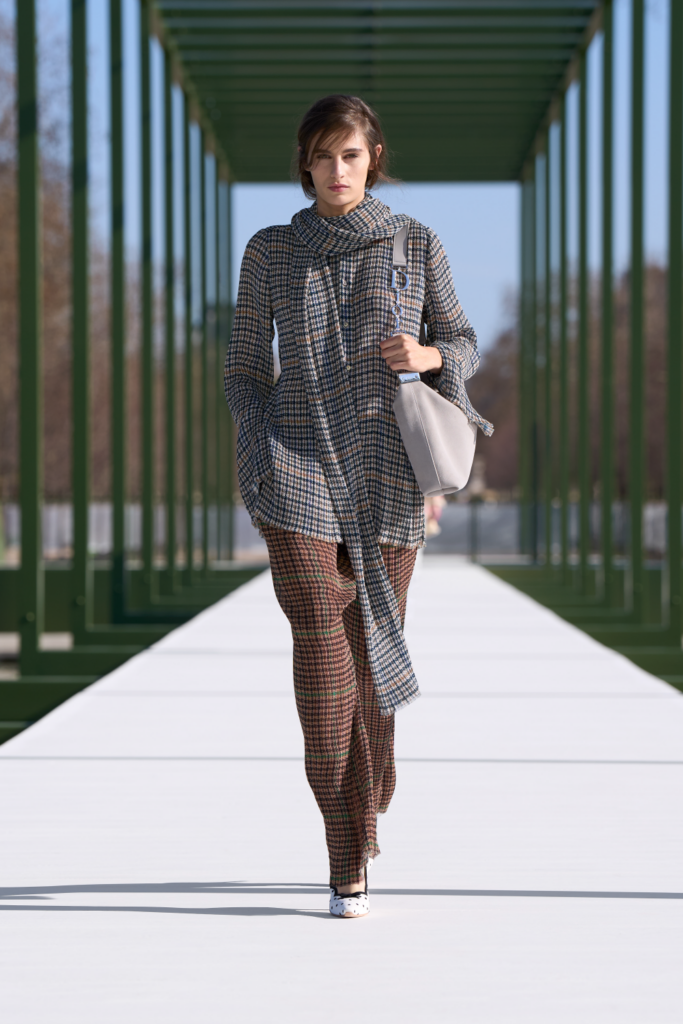
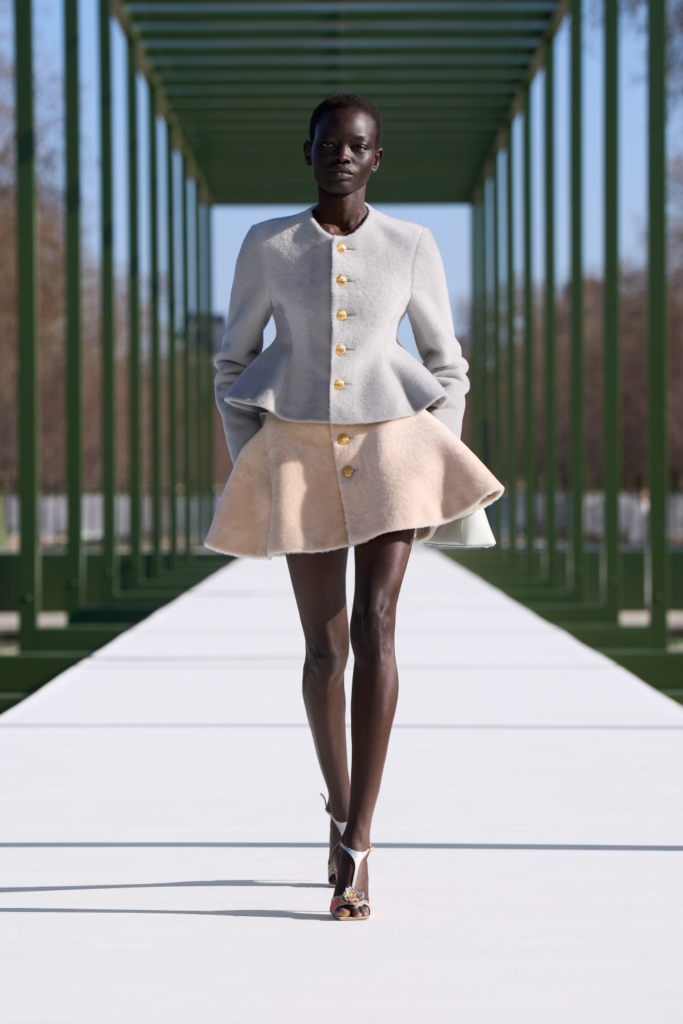
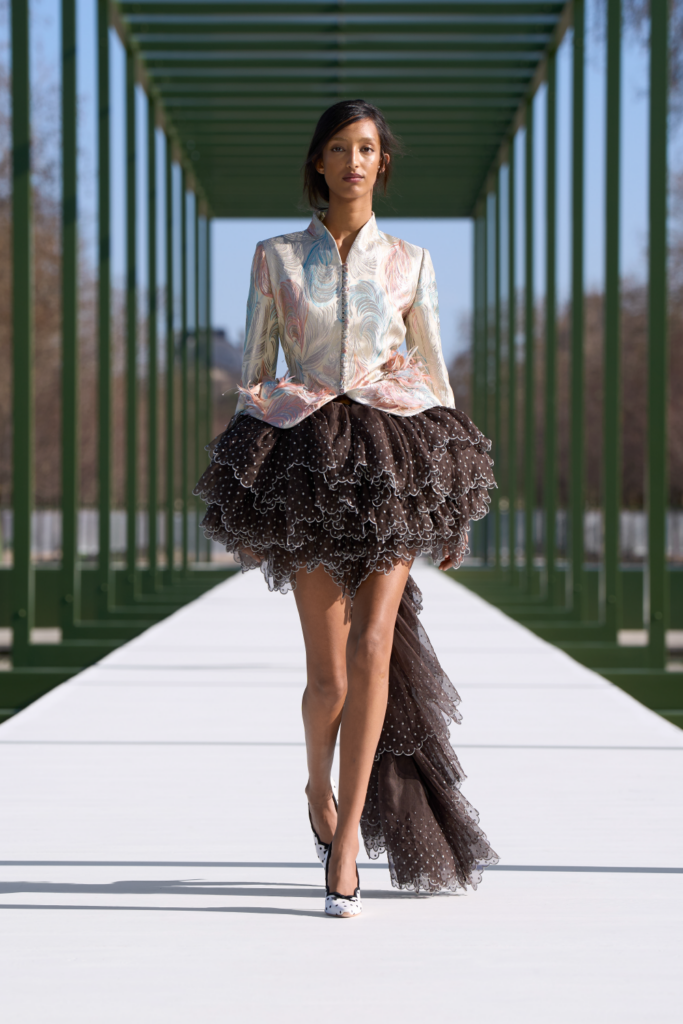
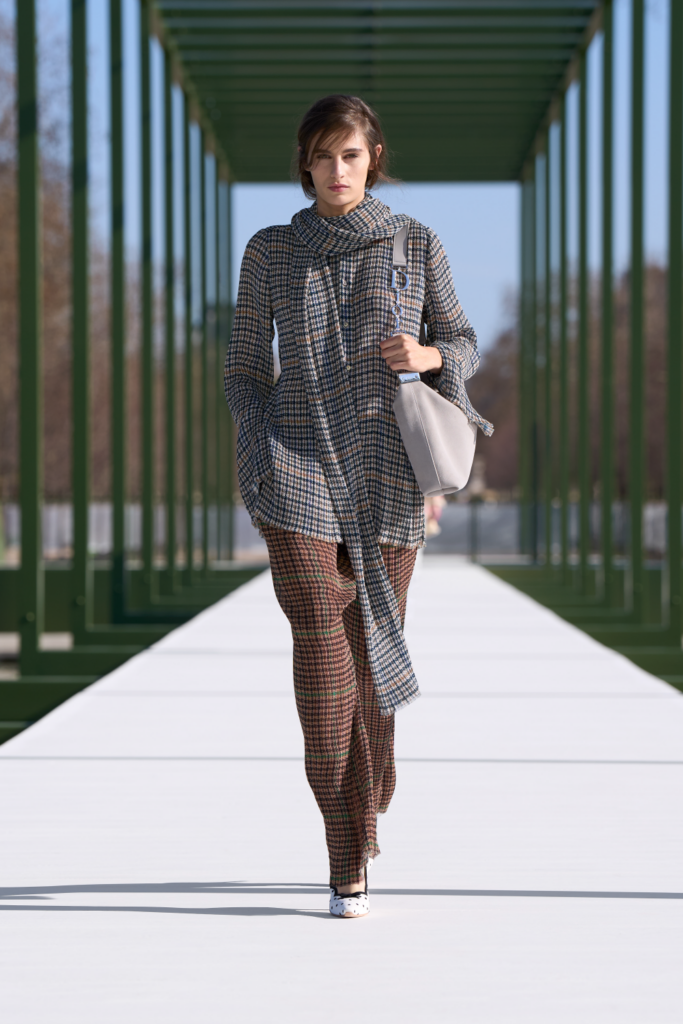
That same spirit was revived with the Dior collection, where, for his second womenswear show, Jonathan Anderson created an imitation park within the park itself, featuring a wooden deck runway above a pond of Monet-inspired water lilies. Here, Anderson blurred the lines between the real and the artificial, sparking a dialogue between nature and illusion.

Take a Spring Stroll Through the Jardin des Tuileries with Dior
1 / 2

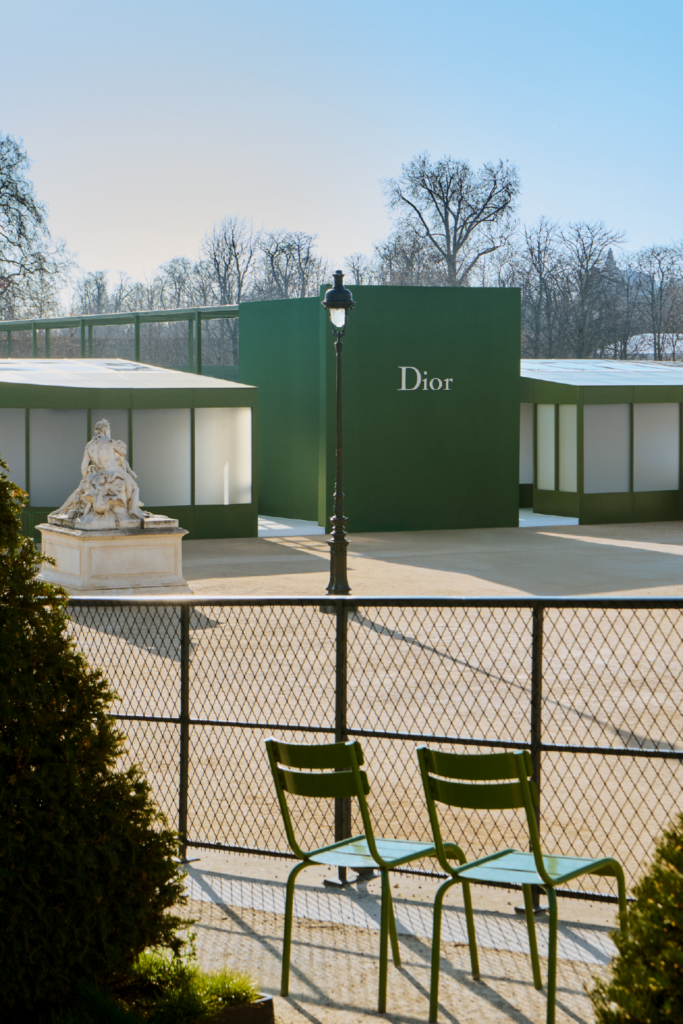
Photos by Adrien Dirand.
As expected, some of the looks draw inspiration from Parisian social rank tropes, with exaggerated proportions that create balloon-like silhouettes with ruffles and peplums. Meanwhile, other looks exuded a more contemporary vibe, including aged or embellished denim and 3D flowers extending from dresses and blazers. But the looks that had everyone talking? Were poka-dot tutus with soft trains following behind them, evoking the drama we all know and love from the house.
Feature image by Adrien Dirand and Valentin Lecron.