
Last year, Kotn opened its first store in London. While this was the brand’s first European location (and 12th worldwide), it also marked the beginning of an exciting new chapter. But the true surprise wasn’t on the shop floor. Just up the wooden staircase, a completely different vision was taking shape. Here, Beit Kotn was underway. Instead of ready-to-wear and homeware pieces that built the brand’s success, Kotn was stepping into hospitality—with a bespoke creative residence and private hotel.
As an Egyptian-Canadian brand, it’s natural that Beit Kotn (which translates to ‘The House of Kotn’ in Arabic) would be rooted in the spirit of Middle Eastern hospitality. At its core, the space is defined by a comforting principle of ‘my house is your house,’ with open doors and a focus on fostering connection under one shared roof.
Become an S Insider
The latest in fashion, beauty, design, and arts & culture.
“Middle Eastern hospitality is instinctive. It’s not something you script. It shows up in small gestures, shared meals, open doors, and time spent together,” says Rami Helali, Co-founder & CEO at Kotn. This spirit shapes how the space operates. Here, rigid structures are dismissed, and alternatively, guests are welcomed the same way you would greet a loved one into your home. “The goal is to create an environment that feels generous and natural rather than formal.”
This philosophy came from Rami’s own experience in Egypt, shaping his perspective and motivating the fabric of Beit Kotn. “Hospitality has always been something we grew up with. In Middle Eastern culture, welcoming people in is instinctive,” says Helali. He shares a memory from his early days at Kotn, when he spent time in a village in Fayoumlearning about cotton. “I met a farmer who invited me to his home for dinner that same night. I ended up staying with his family for months, working in the fields and getting to know the community,” he says. That sense of openness—where a stranger quickly becomes part of a household—became the crux of Beit Kotn. “It’s really an extension of those two things: the hospitality we grew up with and the generosity that shaped the beginning of the brand.”
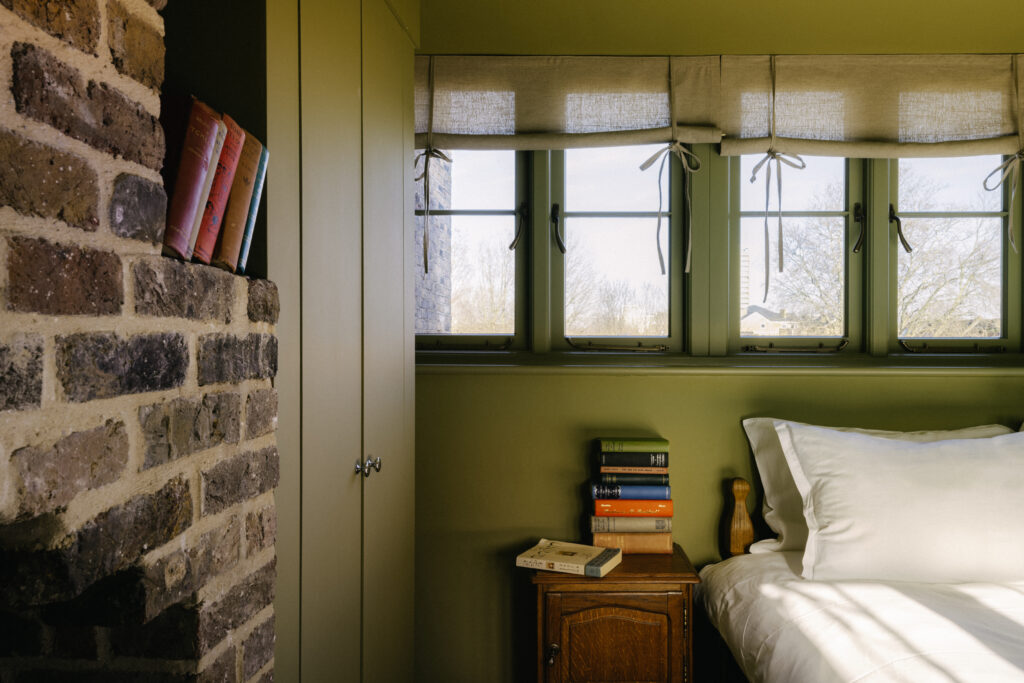
The interior language of the space is influenced by Cairo‘s urban design. Working alongside designer Nour Fakhrany of Copenhagen-based Spacon Studio, they weren’t trying to recreate a specific historic style or period; instead, they examined how spaces in Cairo evolve over time and the enduring qualities that remain. “The idea was to capture that layered feeling. A home that reflects different influences, craft traditions, and periods of history living together,” says Helali. What appears is rich, carved wood, bright pops of colour, and contemporary elements that, together, feel lived-in rather than staged.
With so much creativity and thought woven into each choice, Helali describes the space as designed for creatives and cultural thinkers from the global creative community. It isn’t a traditional hotel you can book online; it functions as a creative meeting point or hub. “The goal is to bring together people who arrive with intention and leave having built something meaningful, whether that’s a project, a collaboration, or a new connection,” he says.
While Helali is planting the first seeds of the project in London, the team is already planning to expand to other cities. “London is the first chapter, and Cairo will be the next. Cairo is especially meaningful because it’s where our story began,” Helali says. “Beyond that, we think about cities where culture, creativity, and diaspora intersect. Places where people are already moving between worlds.” Rooted in generosity and creative exchange, Beit Kotn fosters a creative sanctuary—one where ideas, stories, and the principle of ‘the more the merrier’ are familiar.
Photo courtesy of KOTN.