
The “Lady in Silver” has finally stepped out of the shadows. As Bridgerton returns for its highly anticipated fourth season (Part 1 is now on Netflix and Part 2 streams on February 26), the spotlight falls on Yerin Ha, the Australian actress tasked with bringing the beloved Sophie Baek to life. For Ha, known for her grittier work in Halo, the transition into the silk-and-lace world of the Ton wasn’t just about learning the choreography of a Regency ball, but also about navigating a deeply personal journey of self-love and representation.

While Bridgerton is synonymous with high romance, Ha was determined to ensure Sophie felt grounded in reality. To do that, she looked for the cracks in the “polished romantic interest” veneer.
Become an S Insider
The latest in fashion, beauty, design, and arts & culture.
“I think a big scene for me in Part One was the funeral scene,” Ha shares. “That was the day that her life changed and for people to be able to really understand Sophie and the reason why she might be having so many walls up is, I think, stems back from that day.”
Beyond the trauma, Ha pushed for moments of levity to ensure Sophie never felt like a “victim.” Whether it’s a clumsy moment in a carriage or a flash of sass directed at Benedict, Ha wanted to showcase a three-dimensional woman. “I think because Sophie’s backstory can feel so heavy and sad, I think especially in the scenes like my cottage or the carriage ride with Benedict, I wanted to find some levity. I wanted her to feel like she’s not a victim by any means. She’s still able to have a bit of sass or pushback.”
For Ha, the path to the Ton was paved by those who came before. She cites the image of the first Black Duke (Regé-Jean Page) in Season 1 as a pivotal moment that changed her perception of period dramas – a genre she previously felt excluded from.
“The argument that there is no audience if you cast this person or that person is obviously proven to be false,” Ha says. “If anything, it widens the audience because so many people from different walks of life are able to project or inject themselves into these characters.”
As the first East Asian lead in the franchise, Ha views the role as both a privilege and a statement. “When we meet someone, we don’t introduce ourselves going, ‘Hi, I’m Korean, by the way.’ We are introduced as human beings first and foremost. To explore the inner emotional psyche of someone is really exciting.”
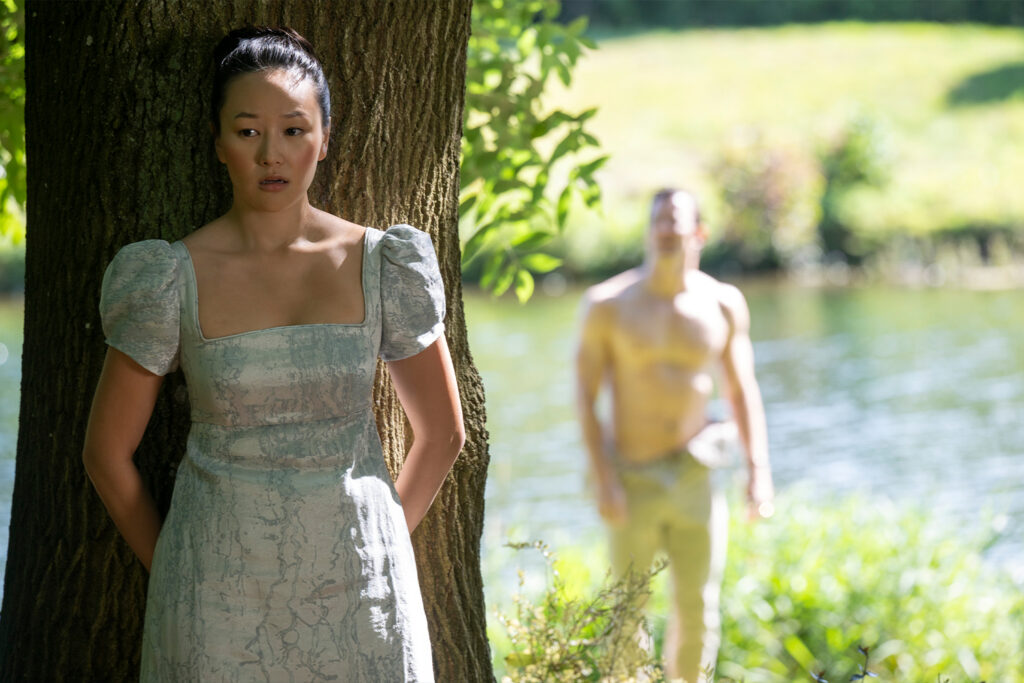
Despite her rising star, Ha admits that stepping into the role of a romantic lead triggered a wave of imposter syndrome, a feeling she shares with her character.
“I didn’t really see a lot of leading ladies that look like me growing up unless it was like Korean films or Korean dramas,” she explains. “It is such a mental shift and I learned so much from Sophie because I think I also struggle with imposter syndrome as much as she does and self love as well, in a society where maybe they might tell you that you viewed a certain way or seen a certain way, constantly having to fight that and over explain can be quite exhausting. So she’s someone who I think has really strong morals and doesn’t lower them for anybody or a man from a noble status like Benedict. I’ve learned a lot from her, and I’m still continuing to learn about what it means to love myself fully and wholly.”
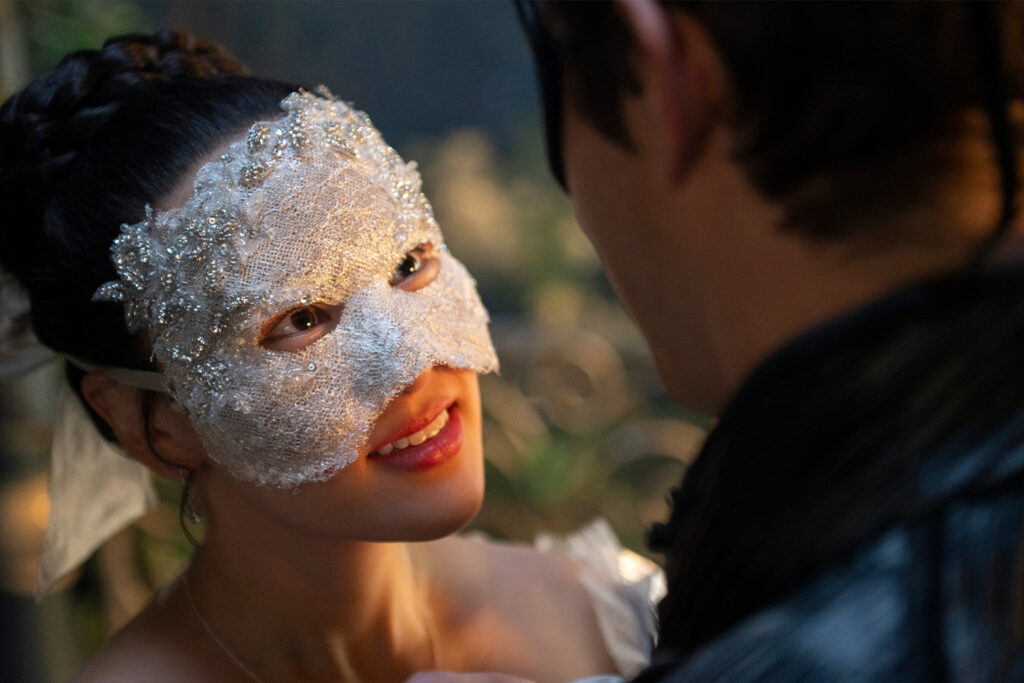
One of the most debated elements of Sophie’s story is the “Cinderella” aspect: the fact that Benedict fails to recognize the woman he loves once she removes her mask and dons her maid’s uniform. Ha sees it as a poignant commentary on class, that while it’s a love story, the class disparity grounds the show.
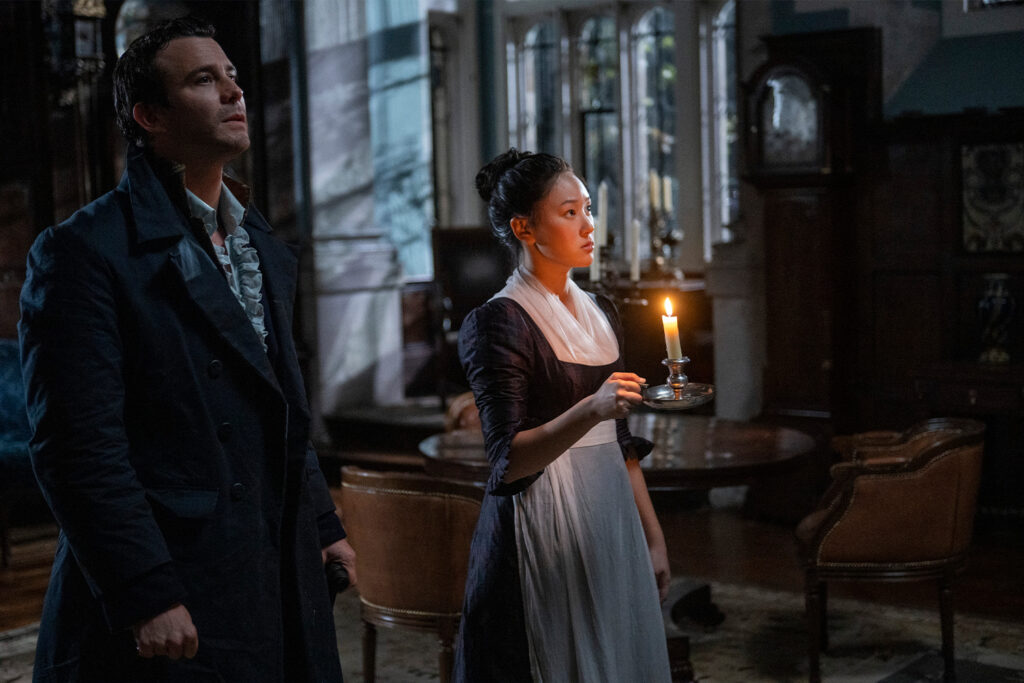
“Actually it’s a mental blockage of not being able to recognize her because maids were invisible back in the day, they were made to be hidden,” Ha notes. “They were made to feel like they weren’t seen or heard. I don’t think for a second he could imagine a maid at a ball that could be the Lady in Silver. Setting it in the Regency period makes that even more interesting to play.”
When asked about the secret sauce that makes Bridgerton romances so intoxicating, Ha points to the universal human DNA.
“Everybody desires love,” she says simply. “It’s an escapism that gives hope in a time where maybe people don’t feel very hopeful. At the core of it, love is a universal theme—whether it’s with a partner, family, or friends. It’s powerful when you find someone to do life with.”
As for the K-drama coding fans have noticed in her scenes: the yearning looks and near-miss kisses? Ha laughs loudly. “I wasn’t thinking about that at all! I was just trying to stay present with Luke [Thompson]. But if that’s what people feel, I’ll take it!”
Bridgerton Season 4 Part 1 is now streaming on Netflix.
Feature image courtesy of Netflix.