
Before a work reaches a gallery wall, it begins somewhere much more personal. Inside the studios of four Canadian artists, books, tools, reference images, and works-in-progress offer a glimpse at how ideas evolve from first instinct to finished piece.

Secret Layer: Inside the Studios of Four Canadian Artists
1 / 2

Hayley Axelrad
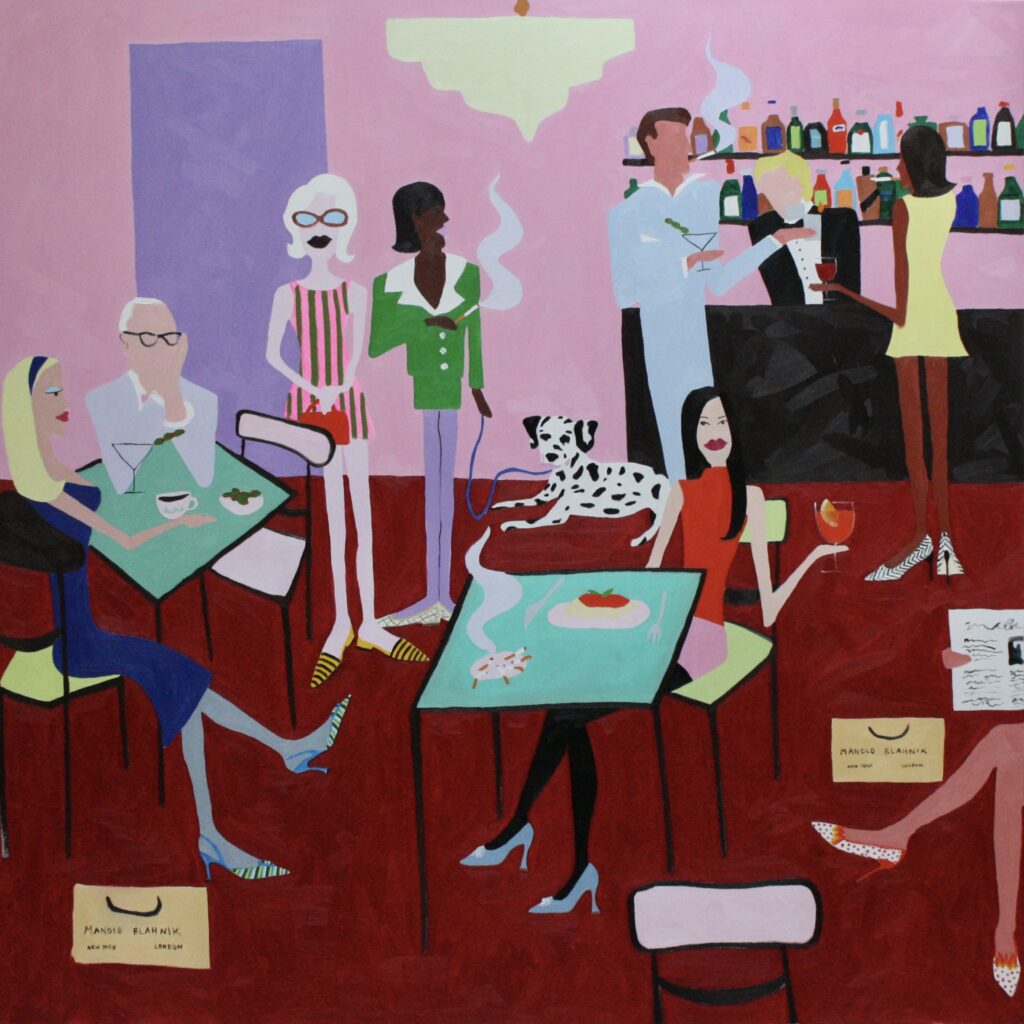
Toronto-based painter Hayley Axelrad creates bright, playful worlds filled with colourful mansions, tennis courts, and characters lounging poolside or drinking martinis at the bar. On the surface, they’re scenes of glamour, luxury, and leisure. Look closer, though, and there are undercurrents of loneliness and dissatisfaction.
Become an S Insider
The latest in fashion, beauty, design, and arts & culture.
To build these worlds, Axelrad starts with a Pinterest board of digital inspiration before lightly sketching an idea onto canvas and mixing her colours. A painting can take anywhere from a few days to several weeks, usually with a podcast playing in the background—Armchair Expert and Lena Dunham’s The C Word are current favourites. She works out of a Toronto studio tucked inside the Academy of Realist Art, where she previously studied and the space is layered with books, magazines, reference images and, as you can imagine, plenty of colour.
She began her practice in realism but eventually wanted the freedom to create without relying on reference photos. “The more paintings I made, the braver I got about incorporating whimsical elements and having fun with it instead of feeling so serious,” she says.
Despite the darker ideas beneath some of the scenes, Axelrad insists her work “isn’t that deep.” Above all, it’s meant to be lighthearted fun.
Hayley’s work will be featured at the Mejuri flagship store in Toronto from September 1–30.


Secret Layer: Inside the Studios of Four Canadian Artists
1 / 2

Fin Simonetti
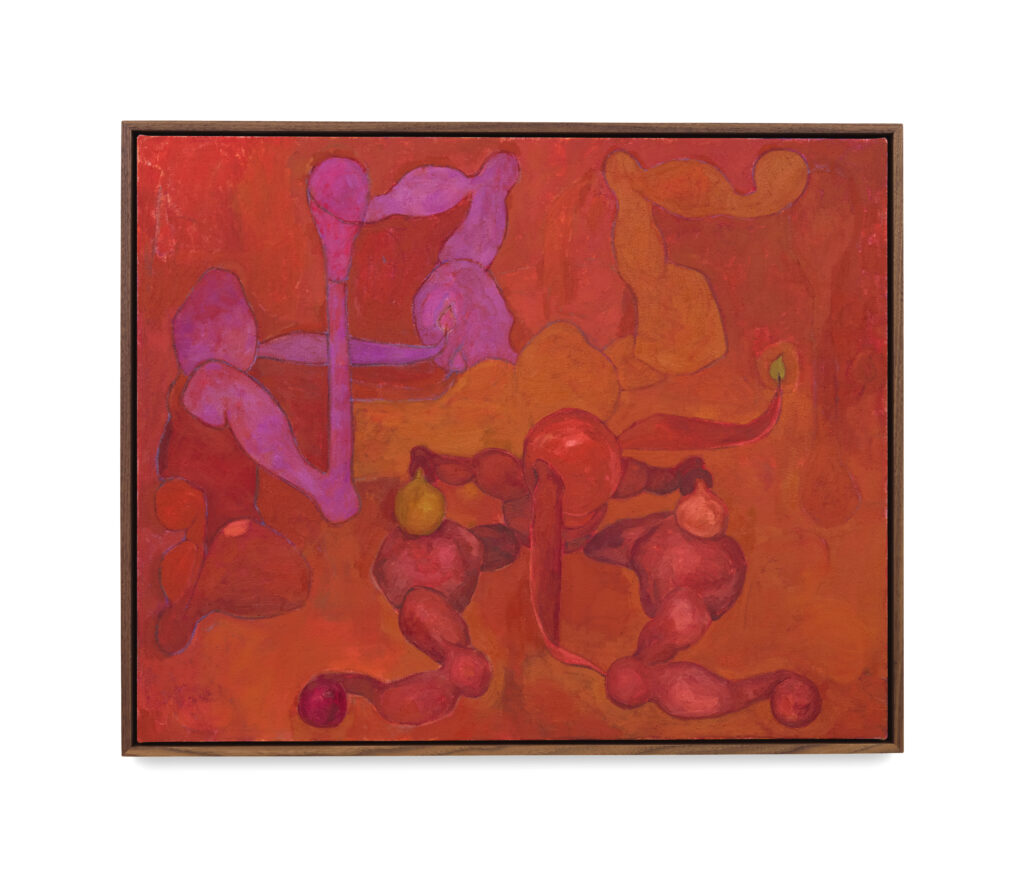
Fin Simonetti keeps the walls of their New York studio bare, preferring to let the visual noise come from the work itself. Tools are in plain sight like cues for what might happen next and a podcast or audiobook often plays in the background. “Listening to a podcast or audiobook can be helpful because it babysits the brain,” Simonetti says. “The decisions happen on more of an intuitive gut level.”
Simonetti has been making art for as long as they can remember. As a child, they froze plastic animal toys in containers of water, then shaved away the ice to create abstract forms around the figurines. That early fascination with manipulating familiar objects still runs through their practice.
Today, Simonetti transforms things like locks, pacifiers, and fire extinguishers into uncanny sculptures that get viewers to reconsider their associations with everyday objects. “I gravitate towards sculpture because it’s visceral and has a relationship to the body,” Simonetti says. “Dealing with the limitations of a material also involves a lot of problem solving, which appeals to me.”


Secret Layer: Inside the Studios of Four Canadian Artists
1 / 2

Delphine Hennelly
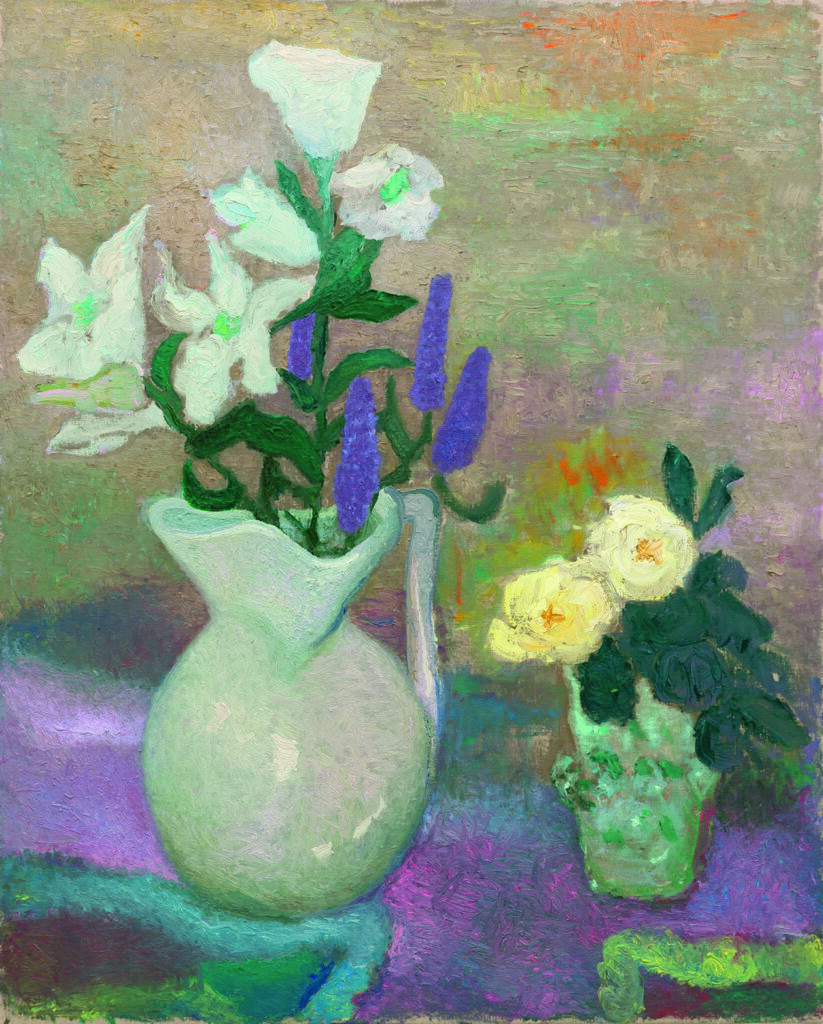
Montreal-based painter Delphine Hennelly keeps her studio relatively spare, with only a handful of reference images taped to the walls and open books, which she rotates, spread across a table. Paintings at different stages surround the space, leaving visible traces of her process as she moves between observation, experimentation, and making.
For Hennelly, painting is less about depicting reality than uncovering what’s embedded within it. “More than anything, I am interested in sensation and the felt sense of objects and their circumstances, and the unseen histories they carry,” she says.
She approaches each work as a form of investigation, piecing together meaning from incomplete evidence rather than beginning with a fixed conclusion. “Painting offers a different form of thinking. One that is embodied, material, and intuitive, while remaining rigorously analytical,” says Hennelly.
Delphine Hennelly’s work is on display at The Armory Show with Huxley-Parlour in New York City from September 24–27.

Secret Layer: Inside the Studios of Four Canadian Artists
1 / 2

Karice Mitchell
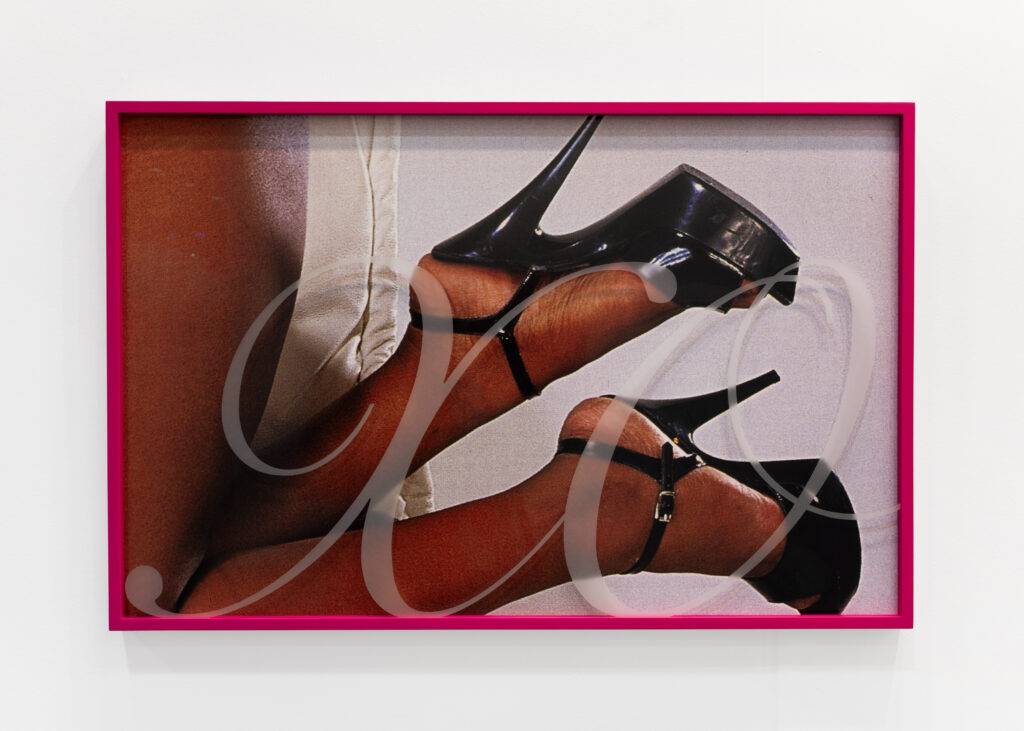
During her Masters of Fine Arts, Karice Mitchell was searching for source material when she came across Players Magazine, a 1970s erotic publication, at BMV Books in Toronto. Drawn to its representation of the Black female body, she began using the magazine as an archive for exploring Black visual culture.
In the studio, Mitchell scans, enlarges, crops, and layers archival images rather than shooting new photographs. She works surrounded by books, screenshots, photographs of important Black women in her life, and stacks of Players, noting recurring colours, typography, language and, landscapes. “I try to slow down time as much as I can when looking at the images and really look at them, into them,” she says.
Mitchell also experiments with paper, etched glass, and text overlays. Now based in Vancouver, where she is an assistant professor of photography at the University of British Columbia, she says the slower pace of the West Coast has encouraged her to listen more closely to what surrounds her.
Karice’s work will be on display at the Franz Kaka gallery in Toronto this November.
Feature image photography by Paul Cooley.


