
Spy thrillers and women who need saving have long gone hand in hand. It’s a trope built on decades of Bond girls who often existed as sexy prizes, sexy victims or sexy collateral damage. (We’re sensing a pattern here, right?) Being painted head-to-toe in gold while nude and left for dead remains one of the most notorious examples—a reminder of just how little agency female characters were often afforded within the genre.
Thankfully, a new wave of spy thrillers have made room for complex female characters whose idiosyncrasies are just as fascinating as their male counterparts. Enter Samia, the brilliantly layered modern damsel in distress at the heart of The Agency, which premiered its second season this past weekend. Expertly portrayed by Jodie Turner-Smith, Samia may be imprisoned in Sudan, but she is never reduced to a victim.
Become an S Insider
The latest in fashion, beauty, design, and arts & culture.
The series follows CIA operative Martian (played by Michael Fassbender, alongside a star-studded cast including Richard Gere, Katherine Waterston and Jeffrey Wright) as he navigates a dangerous mission, one that has already led to said imprisonment of Samia, his lover. In Season Two, some of the show’s most intriguing questions emerge through her and the relationship with Martian.

Ahead of season two’s release, Turner-Smith joined me to discuss all things Samia, and the ways her character and her style draw from real-life experiences.
I got a little bit of a taste of Season Two. It was very gripping. What interested you about this series originally?
Jodie Turner-Smith: I was already familiar with our source material, Le Bureau, the French show, so I had an awareness of what was coming in a general sense. While we’ve adjusted many things to pertain to the geopolitical issues in our show, it is still following the overall plot structure.
I was very excited about the opportunity because we’re putting our own spin on it and talking about things that are actually happening in the world, particularly some of the issues in Sudan and the ways power functions to shape how a country moves forward and what causes dysfunction.

How do you relate to Samia’s journey this season?
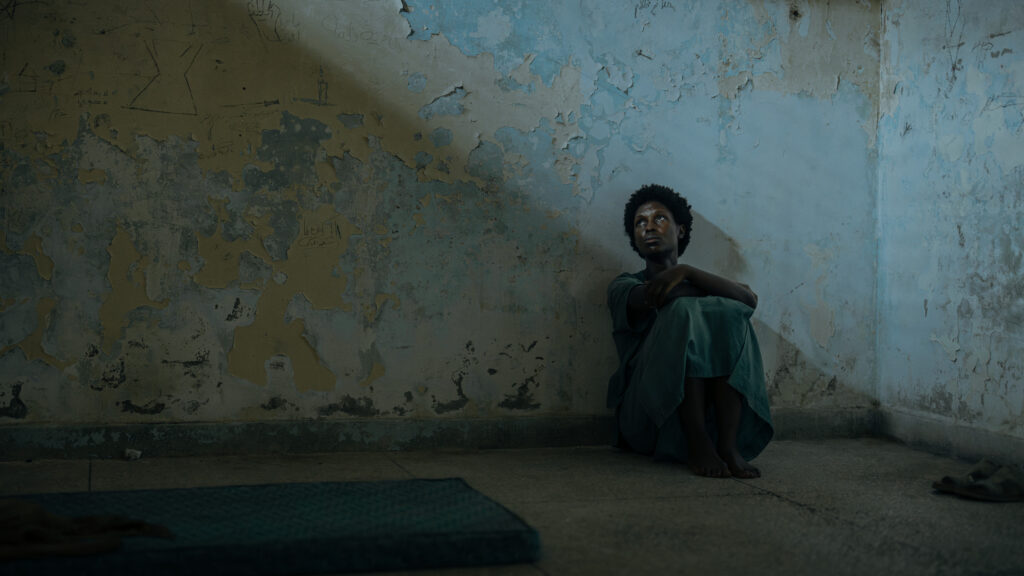
JTS: Obviously, being in captivity in Season Two, there’s nothing you can really relate to in order to prepare yourself for something like that. I tried to tap into personal accounts from political prisoners because this is a very real thing that happens in the world and is happening in Sudan. It’s also happening in this country, in the United States. I wanted to do as much research as I could to get myself ready.
But once you’re transported into it—when somebody locks a prison door behind you and it’s just you alone in there—it becomes very real. The place where we filmed in Morocco was actually formerly a prison. Buildings carry energy, and you could feel all of that.
The most interesting thing to me was the opportunity to speak about a fictionalized version of something that is actually happening. Friends of mine who are Sudani, as well as strangers who have reached out, have said it was refreshing to see a show tackle that experience in any way.
One of the most interesting things about the show is how intimacy and personal relationships can be used against you. Samia was imprisoned because of her private relationship with Martian…
JTS: Obviously the circumstances are heightened. I’ve never been in a situation where I’m dating a spy and it forces me into becoming a political prisoner. But it’s very human to want to trust someone in a relationship, and to experience what happens when that trust breaks down. I’m sure you’ve been in a relationship where afterward you’re like, “Who even was this person?” Somebody betrayed your trust. This just takes that experience to the next level. Somebody betrays your trust and now you’re accused of treason. The stakes are much, much higher, but we arrive there through very familiar emotional territory. The consequences are just heightened.
How does your character navigate trust, and has playing her made you think differently about trust personally?
JTS: What’s amazing about the show is that even though most of us will never be spies or work in espionage, we can still be interested because at its core it’s very human. How do I navigate these circumstances? Safety, trust, love, heartbreak, betrayal, the conflict between work and real life—those are all universal experiences. It’s the humanness of it that makes it intriguing for an audience, and definitely intriguing for me as an actor.

A lot has been made about your costumes on the show and how elegant they are. How involved are you in shaping your character’s look?
JTS: One of the most collaborative departments, no matter where you are on the call sheet, is costume. They know the performer needs to feel like what they’re wearing is lived in. In front of the camera is the last place where you want the clothes to be wearing you. So it’s always collaborative. With something like Bad Monkey, it was much more me saying, “This is exactly how I want to look—my nails, my hair, my makeup.” They really let me run with that. On this show, it was more of a constant dialogue about what felt good for me and what made sense for the character.
For Season Two, Samia’s wardrobe is very different from Season One. We begin with her in prison gear. When anyone is imprisoned, they’re put in a uniform and assigned a number because the goal is to strip away their identity. We find Samia with her identity stripped away, and then she is rebuilt in the image these people want from her so she can become a talking head with appeal to the West. She has no say in it.

Because they wanted her to have a Western appeal, the clothing became more fashion-oriented. She’s wearing designers. Her silhouette is completely different this season—more sleek and less flowy. In Season One, the flowiness represented a freer version of herself. She wore beautiful hijabs and fuller clothing. In Season Two, she’s told she cannot wear her scarf and must dress a certain way. Through all of that, she’s also navigating her own identity. She’s having an existential crisis and questioning the identity she put on before. If that identity didn’t protect her from this moment, then what does it mean?
You play with fashion a lot in your real life. Where are you at with your personal style these days?
JTS: My personal style is always dictated by how I feel in the moment. But as I continue working in this business and spending more time in the fashion world, I learn more things. I recently started working with Law Roach, who’s so incredible and knowledgeable. He’s a collaborator in a completely different way, and it’s changed my approach even further. I continue to evolve and learn more, even about fashion history. It’s not just dictated by how I feel in the moment anymore. It’s also about what story we’re telling.
Feature image by Luke Varley, courtesy of Paramount+.